1Who can benefit from Craniosacral Therapy?
This therapy is suited for all ages, from infants to the elderly, and those with painful, delicate, or degenerative conditions.
2What to expect during a treatment?
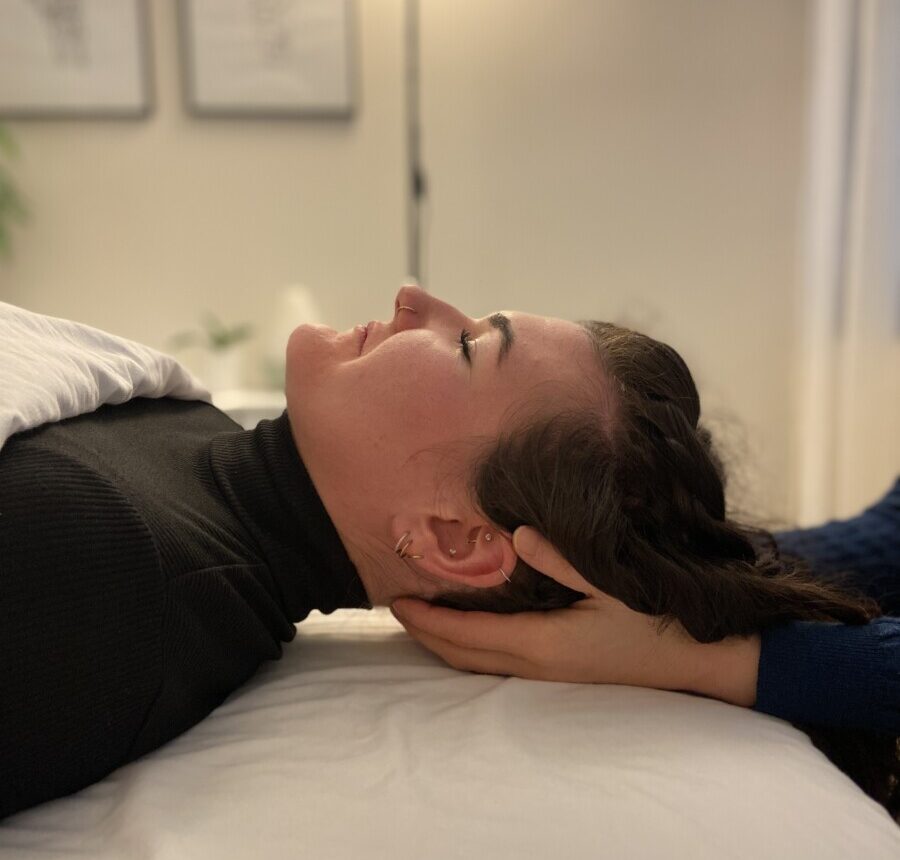
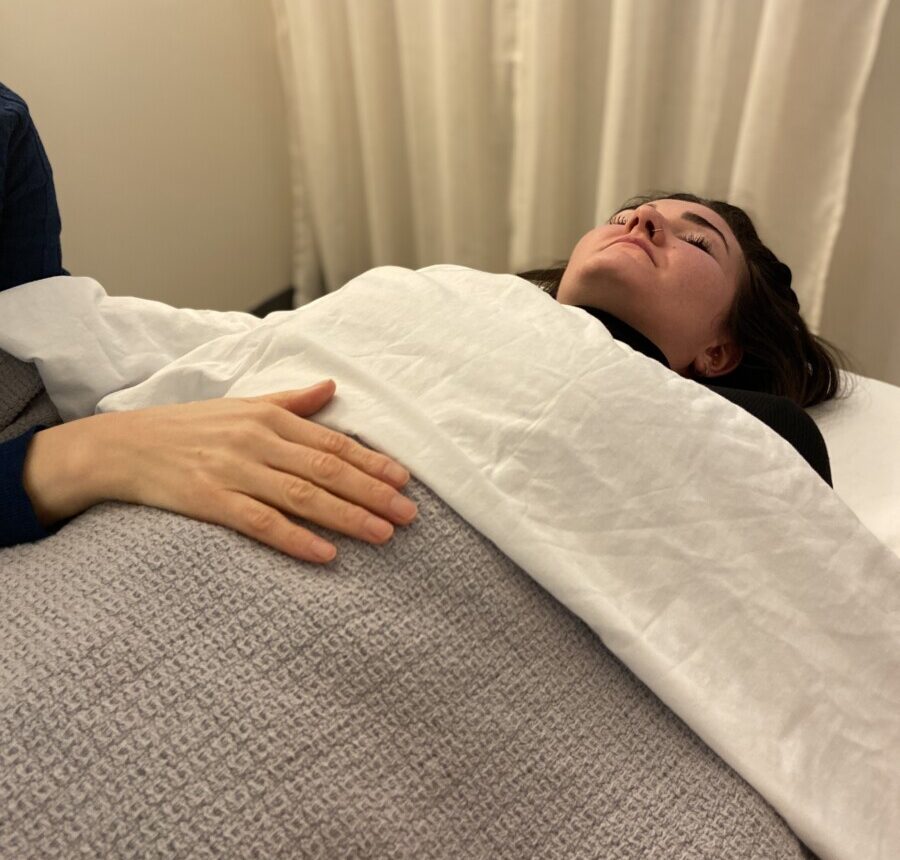
You will be fully clothed for the entire session, and laying down comfortably on your back or side in between sheets on the massage table, or on a chair if needed. It is recommended to wear comfortable loose or non-restrictive clothing without a belt. After establishing a level of safety and comfort for you, the therapist lightly place their hands on you body. Most common place to start the session would be at their feet. Throughout the session, the therapist will check in with you to make sure that the level of comfort and safety is maintained by communicating, and negotiating the space and contact between them. Most common areas to contact during the session would be back, shoulders, sacrum, abdomen, head, but other parts of the body may be contacted as well. The therapist will always let the you know where they are going to make contact and get your permission to do so before doing so. You may feel a lot of different sensations in your body throughout the session including coolness, warmth, lightness, floating, heaviness, tingling, twitching, jerking, stomach rumbling, deep relaxation, or nothing much at all.
3What to expect after a treatment?
You may feel changes in your pain or stress level. You may feel more relaxed, yet more energetic, more connection with your own body, sense of more clarity in your mind, or you may experience some dizziness, lightheaded, or sleepiness. When the session is over, please take time to move and get off the table to prevent from falling. The therapist will have a quick chat with you about the session, and might give you some homecare advice before you leave the clinic. Your body may continue to process for up to a day or so after the session.
4How long will a session take?
Your initial visit is booked in one hour increments with hands-on time usually about 40 to 45 minutes. The session includes discussion about your condition and treatment goal, and explanation and home care advice after the session. There may be times when your body will stop responding in a shorter time as it has done what it can for that day. In that case, we honour what the system needs and take my hands off at that time, and then go over what is needed to be discussed. The number of sessions needed depends on what symptoms you have, what your goals are, and how readily your system responds to the therapy. As a general rule, three to ten sessions will have a significant impact on most people’s heath. In some cases only one session can make a major difference. Some conditions require regular sessions for longer periods of time, followed by occasional sessions to maintain health.
5What conditions can BCST treat?
Anxiety
Breathing issues – Asthma, Bronchitis, etc.
Chronic Fatigue Syndrome
Concussion – car accident, fall, sports related, etc.
Depression
Digestion issues – Constipation, Irritable Bowel Syndrome,
Exhaustion
Fibromyalgia
Headaches – tension, migraine, etc
Hormonal imbalance
Hyperactivity
Impingement of cranial nerves or spinal nerves – sciatica
Insomnia / Sleep disorders
Learning difficulties
Muscular pain – neck pain, back pain, leg pain, etc.
Reproductive organ related conditions – fibroid, infertility, menstrual pain, etc
Stress
Trauma of all kinds – accidents, birth, falls, and other injuries, abuse, PTSD, etc.
TMJ and dental problems